Introducing: Retailgentic - A New Pod Focusing on GenAI Shopping Agents and the impact on retail: Retailgentic


 Overcast
 PocketCasts
 Amazon Music
 Audible
 Youtube Music
 RSS Feed
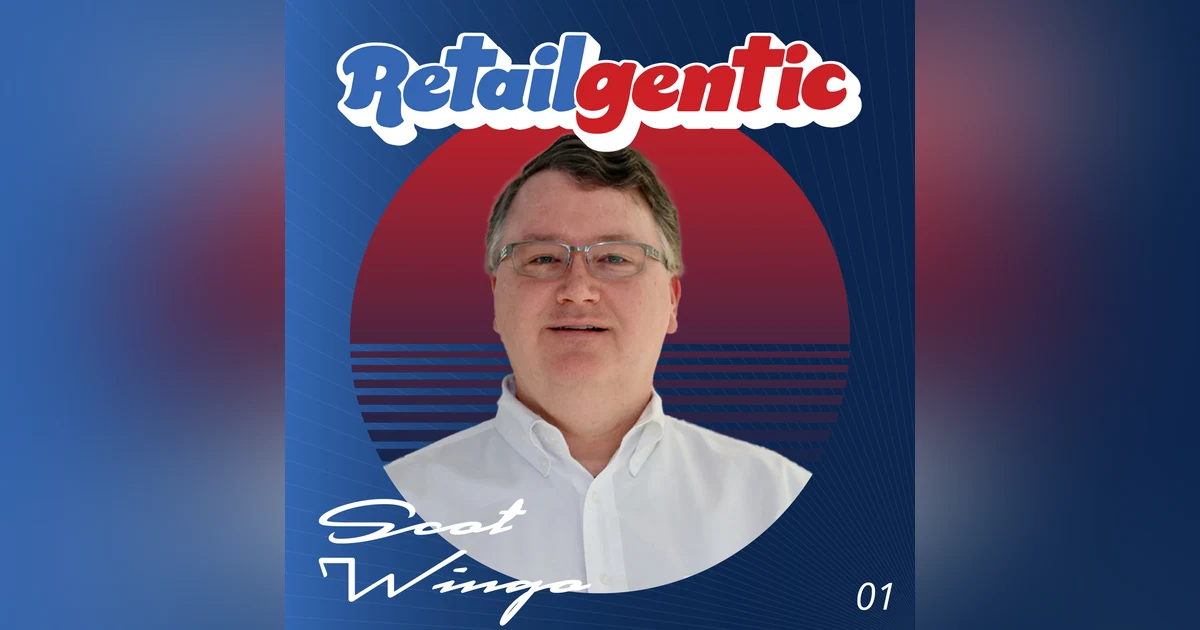
Greetings Jason and Scot show listeners. Today we are cross posting the first episode of a new podcast from Scot Wingo, the 'Scot' from Jason and Scot. Don't panic! The Jason and Scot show is still alive and kicking - Jason's schedule has limited our time together, but we're working on it.
While you wait, Scot has a new podcast that is focused on an area he's excited about - the disruption coming from AI Shopping agents. This podcast has three elements:
- Retailgentic substack - www.retailgentic.com - Regular long-form content on strategies in the World of AI Shopping agent plus breaking news
- Retailgentic pod - This podcast has a video option on youtube here: https://wwww.youtube.com/@retailgentic
- Retailgentic pod - If you prefer the classic audio podcast, you can subscribe in your favorite podcast apps.
Where to find the Retailgentic podcast
o Apple/iOS podcast - https://podcasts.apple.com/us/podcast/retailgentic/id1816979446
o Spotify - https://open.spotify.com/show/5JfNVnENi8y1GnnW6beo7V
o YouTube - https://open.spotify.com/show/5JfNVnENi8y1GnnW6beo7V
o All others - https://retailgentic.transistor.fm/subscribe
Thanks for checking it out!
Scot
0:00 Welcome Jason and Scot Show listeners. I'm Scot Wingo. Jason is busy flying around the world meeting with his millions of clients and adding words to his title. While we wait for his availability for the next Jason and Scot Show, which will be coming soon, I wanted to introduce you to a new podcast that I'm doing solo called "Retailgentic," the combination of the words retail and agentic commerce or retailgentic. On the Retailgentic podcast, we'll take a very laser-focused look at the news and impact of AI shopping agents or agentic shopping. We started ChannelAdvisor in 2001 because we believed marketplaces would be an exciting and disruptive way to buy and sell products online.
0:45 We are at the beginning of what I think is an even more exciting phase of the evolution of digital shopping, agentic shopping. While e-commerce delivers a low-friction experience, the growth rate has slowed dramatically, and the user experience has been flat or even some argue it's degraded in the last 10 years. I'm optimistic that AI shopping agents are going to further reduce friction and create a new shopping experiences that reignite the growth of online shopping. We'll be cross-posting the first episodes of the new podcast so you can get a flavor for the new Retailgentic pod over here on the Jason and Scot Show. And we would love for you, if you're interested, to come subscribe to our Substack or the podcast at retailgentic.ai.
1:30 That's retailgentic.ai. Thanks for listening, and we'd love to get your feedback. We're real excited to kick this off, and I think you're gonna enjoy learning about this as much as I do. And along the way, we're gonna learn a ton, and it's gonna be really fun watching how fast this happens, the choices retailers and brands make, and the best practices that develop over time. You're not alone on this journey. We'll be there with you all along. Welcome to the Retailgentic Podcast, where we explore the intersection of retail, e-commerce, and AI agents, which we call Retailgentic.
2:11 Our mission is simple. We are shining a bright light on the new agentic AI shopping megatrend, which will disrupt the trillion-dollar digital retail market. The stakes are high. Google, OpenAI, Microsoft, Perplexity, Amazon, Apple, Meta, and Anthropic are all fighting to be the consumer AI shopping agent winner. There are gonna be some tough decisions for online brands and retailers to make. What happens to checkouts? How should payments work? Should you continue to invest in retail media networks? What does the world look like when over half of your traffic is not from humans, but from AI agents?
2:52 These existential questions are the tip of the iceberg. On this podcast, we're talking to industry experts, analysts, and influencers to get answers to these questions, identify trends and best practices. This is Retailgentic, your podcast partner in navigating our AI shopping agent future. And now here's your host, Scot Wingo. Hello, and welcome to the first episode of Retailgentic Podcast. I'm your host, Scot Wingo. This is what I like to call a foundational podcast. As we go through this podcast over the coming weeks, months, and years, uh, the-- there's some foundational concepts that I'll refer back to, and this podcast lays those down.
3:40 This way, I don't have to say them each time, and you don't have to get tired of hearing them. I'll just say, "Back on the foundational podcast." So, a little bit about me. I'm a, a serial founder here in the Raleigh-Durham Triangle area, called the Research Triangle Park, and I'm on my fifth startup. The startup most of you probably know me for is called ChannelAdvisor. I started ChannelAdvisor in 2001, and we had this idea that marketplaces would be a big thing, and the first marketplace was really an auction site called eBay. So we started in 2001, and it took seven years for the next au- marketplace to show up, and that was, thank good- goodness, that was Amazon, so it was a good one.
4:20 Uh, and today, uh, we all know marketplaces are a huge thing. Th- uh, every retailer's adding them or has added them. There's companies like Miracle that are enabling this trend. Uh, so retail media networks are layered on top, et cetera. So that took, uh, quite a while. You know, I'm sitting here 24 years later, and it was a good prediction, but it took a while. Uh, we took ChannelAdvisor public 2013. Then in 2015, I moved to the board, still stayed involved until it was sold to CommerceHub in 2022, um, and started a company called Spiffy, which was exploring the intersection of e-commerce and digital services. Then, uh, so I've been doing that for 10 years, and then decided in the fourth quarter of 2024 that AI was gonna be such a big change that I, I had, as an entrepreneur, I would regret missing out on that.
5:14 So did some soul-searching and, uh, learning and came up with the idea that is RefiBuy. Um, also, uh, one of my s- my passion projects is I'm very active in our entrepreneurial community here in the Triangle, helping other founders, and I've started a whole bunch of things under this banner of Tweener. A, a tweener is a Triangle company, just like we use for kids that are kind of in that awkward, you know, adolescent, not quite a teenager yet phase. We call them tweeners. Um, the companies get into that phase as well. So we track those and invest in them and do all kinds of things under this Triangle Tweener brand. So if you see me post about that on LinkedIn, that's what that's all about. So decided to start this podcast because as I got up to speed on, uh, AI, the, uh, uh, you know, various things like retrieval-augmented generation and some of these… And when I say AI, I mean, for me, AI starts at ChatGPT in, in 2022.
6:10 So, um- You know, the-- I found that no one was really focusing on this intersection of AI and e-commerce. Uh, sure, we cover it on a bunch of other podcasts, but I think specifically one area that is gonna be as big, if not bigger, than marketplaces, and that is this agentic or these agents. So our goal here is to shine a bright spotlight on this trend, uh, help retailers and brands navigate and learn, come up to speed on this, because I do think it's gonna be very important for everybody. Um, this is gonna create, uh, this AI curve that we're on is faster than anything we've ever been on, and it's gonna happen o-on a logarithmic scale, which many humans aren't really prepared for and most businesses aren't prepared for.
6:54 Um, and this presents, uh, both a strategic risk, so I do think this is gonna be an existential risk, just like Amazon/marketplaces has been for a lot of retailers. Um, some of us, some of us didn't make it to the other side of that. You know, RIP to Borders and JCPenney and, uh, you know, all the folks there that, that did not make it. Um, uh, Circuit City is a classic. And then-- but I do think it's an opportunity as well. So what we learned from that big wave of marketplaces is the folks that, that embraced it and rode the wave tended to do better than those that fought it. So our job here on the podcast is to have conversations pretty specifically about this area. We're not gonna be doing Amazon earnings or any of those types of things.
7:37 Um, and just so that we can surface what's going on so that you have the most information at your fingertips as you navigate this complex, changing world that we're about to enter. We have three ways you can consume our content. Um, the first one is we have a Substack, and this is basically a subscription newsletter. It's free. There-- it will never be paid. Uh, and it's at retailgentic.ai. Uh, so go sign up for that if you have not. Um, and it's long-form content that, that we put out, and so it kinda has several flavors. There's news, so if something breaking happens, uh, you'll be-- that's the first place you'll find out about that. Um, and then a lot of times we are building these longer form content than you'll ca- you'll ha- you'll be able to do on a podcast.
8:20 So maybe an interesting idea or a best practice comes up on a podcast, you'll see more of that reflected over on the Substack. Then, um, keeping-- unlike the Jason and Scott Show, which when we started that, it was much more, uh, common to do audio only, um, we have an audio and video component to this podcast. So the video lives on YouTube, and there'll be some clips on Instagram and TikTok, but the primary channel is YouTube. Um, so you can go subscribe to that if you go to youtube.com/@retailgentic, that will subscribe you there. Um, and then we also have an audio pod, which is available through all your normal audio readers, Spotify, Apple Podcasts, so on.
9:00 So some of the thematic areas that we'll keep poking away at as we learn more about this is I do think if I play out in my mind this prediction that many, many consumers will be using these AI shopping bots or agentic commerce, whatever we wanna call it, it's gonna create some really interesting friction points for retailers and brands to think about. The number one at the very tippy top is should you embrace this or should you block it? Right now there's kind of, uh, a really good example is Walmart and Amazon. Amazon is blocking this. So they have blocked, um, any of the agents, uh, out there, uh, except for Perplexity. It seems like Perplexity, um, I think Bezos is an investor there, and there does seem to be some affinity with Perplexity.
9:41 Um, and then the, uh-- or do you embrace it? There was a Wall Street Journal article at, at Walmart had out where they basically say: "We're gonna embrace agents. We welcome them, and we wanna figure out how do we talk to you. Here's what's the agent-to-agent protocols. How do we get you our product catalog?" That kind of thing. So, so that's gonna be inter- So that's the first kind of… It's almost theology at that level, right? As a company, you need to start thinking about this. What, what is your theology on this i- this issue? The second one is, is this a new channel that's forming like a marketplace? Is this an opportunity or is it risk? Is this something coming between you and the customer that will make you basically just a fulfillment center for, for, um, you know, whatever engine up, up top, you know, for OpenAI or something like that?
10:28 Um, so, so those are the kinda like the first and second order issues that I think we're gonna face as an industry. Now, these are like what I would call third order things, so this is where we're gonna get into the nuances. And this is from, again, 20 years in marketplaces where everyone kinda went through this same thinking, and ultimately the folks that embraced, uh, and treated it like a new channel ended up, quote-unquote, "winning" or, or having an edge. And, and sometimes when you're the first in here, you're getting the fastest learnings, and a lot of them are sustainable for a long period of time. So imagine you're one of the first people that understands the Amazon Buy Box and how that works, and FBA and how that works. You had a huge advantage, and then when the ads came out, you understood all that.
11:11 Um, we found at ChannelAdvisor those customers were taking share on this new opportunity versus the others that were losing share. I'm not really advocating for that, just that's what I witnessed with marketplaces. Again, it's kind of up to every individual brand and retailer to decide where they fall on this and, and what their, their company is going to do. So some of these third-order things that I think are interesting is if you imagine a day where the, the user has this, this kind of digital agent shopping for them, now it's gonna be trickier for you to do some of the things you did direct and, and perhaps you're gonna have to have those relationships with the agent. So maybe you'll have to have an agent on your side that advocates for you and talks or negotiates with the consumer's agent.
11:54 So these are some things like pricing strategies. Imagine an agent comes to your website and you say to it, "Hey, uh, you know, can you tell me about your user? Um, you know, I'd really like to know their name and email." And it says, "My users prefer to-- my user prefers to be anonymous." They could say, "Okay, I get it." That's-- and we do that today, right? Guest checkout. But what if you said, "Well, tell me, is it, is it their first time to our web, to, to our… h- have they ever transacted with us before?" And maybe they'll say, "Oh, sure, yeah, they have." And you could say, "Well, what's their loyalty number?" And, you know, maybe the agent then goes back to the user and says, "Hey," or, you know, "Give me their loyalty number and I'll give you, uh, you know, some better pricing," type of a thing. So there's gonna be like this kind of information exchange, I think, that's gonna be really fascinating to see on this third-order level.
12:37 The personalization, uh, I think this is where the big battle's gonna be because the, the agentic layer is gonna have a better chance at winning personalization because I'll use a pet example. Let's say I'm a value shopper and I just wanna save, you know, 10 bucks on my dog food because it's crazy expensive. Um, my dog's dog food is 60 bucks. So, uh, you know, I am less loyal to Chewy, Petco, and PetSmart, and I want the agent to just kind of find me the best price for that day. Um, so therefore, I want the agent to know my dog and it, type of dog and its name and that type-- I want it to have the personalization, but I don't really care if Chewy, Petco, PetSmart have that information.
13:20 So that's gonna be interesting to see what happens. Um, you know, sizing information. If I, if I, if my agent knows my sizing information, then I don't constantly have to enter it at every website. Um, there's gonna be some interesting things around, um, fit, right? You know, so there's all these companies out there that do all this, you know, how does apparel fit? What's the sizing? I think a lot of that is gonna start to be pulled up into the agentic layer. Um, what's this mean for loyalty programs? Uh, I actually think I'll be contrarian here, because I just kind of painted a picture where they die. I think they're gonna become even more important. So, uh, bec- but it's gonna be, you're not gonna be talking to a consumer, you're gonna be talking to their representative, basically. It's gonna be a really interesting new way of, of dealing with things.
14:03 Um, it comes into-- Coming from the auction world, this is interesting because we had these scenarios where there's these bidding agents that exist, kind of like request for quotes, and corp, B2B is largely consumed through this kind of a mechanism, and I think a lot of those same things are gonna come over to the consumer world for the first time. How do you-- so let's say you do decide that theologically you're going to embrace these channels. If you do, just like we did in the marketplace world, there was different strategies for eBay, Amazon, Walmart, Target. Every, every one of these engines, th- these channels has a different optimization path and scheme and tactics and strategies you use.
14:43 We're gonna be surfacing those, and this is the most interesting area because it's changing so incredibly rapidly. And, but I do think that if you understand this, it will give you a big edge Imagine today someone goes to OpenAI and ChatGPT, and they start looking-- I had this experience. I started looking for a specific toaster. My toaster died. And, uh, you know, it was very, a very useful… If we think about the shopping journey of research, find, and buy, that's where my new company's name comes from. At the research phase, it was incredible, right? So, so the only thing that came close to it was kind of like Amazon, but I would score an Amazon a 1 out of 10, and using an LLM to wr- in that research phase is amazing because I got to an answer way quicker than I can on any retailer site.
15:30 Uh, but then it kind of fell over because, you know, I then… So in the research phase, it was an A+. This is before they launched their new shopping thing, but even the new shopping thing's not that great yet. Um, and then when it came to find, then it kind of, uh, you know, stubbed its toe because I-- it wasn't really good at, at this combination of, as a buyer, I want to think through a multidimensional problem of, uh, when do I want it? How fast do I get it? I'm an Amazon Prime user. I'm a Walmart+ user. That's a factor. Maybe for a c- large consideration purpose, I want to use a buy now, pay later payment mechanism. Maybe I need this toaster, maybe I'm having a toaster emergency, and I need to get this thing through Instacart or one of the delivery mechanisms today.
16:15 Today, they're not really good at what I would call that find-to-buy cycle, um, where there's a lot of consumer preferences that, that come into play, and really understanding all the attributes of availability become essential to being able to nail that. So one of the frameworks we'll talk a lot about is we are going to track the actual companies that are participating in this space very closely. Um, and, you know, so here we have the three states, if you will. Um, so we've got launched, announced, and predicted. So the companies that have launched AI shopping agents, and my definition of an AI shopping agent is it helps the consumer buy across multiple pro- multiple sites.
16:55 So a lot of people would say Rufus is an AI shopping agent. Yes, it is, but it's not a, a general one. It only works on Amazon. So to me, that doesn't really count. It doesn't let you shop off of Amazon. To me, that's just basically an on-site chat or a very specific agent within a site, so it's not the general purpose one. So, so this definition stuff's gonna be important as this, this category grows. The, the one that's been out the longest is Perplexity, and they seem to be investing the most in this area. If you're not familiar with Perplexity, it's a Silicon Valley startup that was the first one to have this idea of the intersection of generative AI or LLMs and search engines. So they were able to get a search index as a retrieval augmented generation and, and have a general AI and really show that you could have an answer engine, a better way, a better way of googling, if you will, of searching.
17:49 Go-- search gives you 10 blue links, um, to go explore on your own. This gives you the answer. So it's way more efficient, and if you haven't tried Perplexity, I strongly recommend it. As part of that, they saw early data, this is me guessing, um, and I have some indications of why, I'll show you in a second. And that led them to really lean in on products and shopping. So they have a very good shopping agent. They have a paid version called Pro, and then within there, they have Buy with Pro Uh, we have a complete write-up on Retailgentic. I won't go through that, but it's, it's very good and, um, you know, its, its problem is coverage. There's Shopify stores and a couple other places where you can actually buy up at the top level in the agent. Otherwise, you're having to go to the… It's more of a discovery platform or a comparison shopping engine type thing.
18:34 Then, then there was a-- So that was in the fourth quarter of 2024. This came out before the holiday season. Um, and then there was a bit of a drought, and then this year Amazon shocked everyone, certainly me. I thought they were, were gonna be one of the last people to do this, because again, you know, they, they have this closed metaphor. They're not gonna let anything come into the top of Amazon. But what's interesting is they actually are-- they do want you to be at Amazon and shop at other sites. So this is called Buy For Me, and, um, again, I have a whole write-up of this on Retailgentic if you wanna see it in action. But you actually… This is more for, for manufacturers or brands that are currently not on Amazon. So you'll actually see this, um, you know, this, this-- as you go through a product listing, there'll be a call-out that says, uh, "This is not available on Amazon, but it, it's available on the third-party site."
19:25 You, you can actually go through and buy the product, and you- Amazon is very clear. It says, "We have an agent that's gonna go buy this for you. Do you really wanna do it?" And it walks through a four-step process and goes and buys a product on a different website for you. Now, today, it's only limited to those sites that take Amazon Pay, which is, like, sub 10%, I would estimate. S- so, so its efficacy isn't really huge, but a lot of these things start that way, and they're gonna add more functionality. Just because something starts with a limitation doesn't mean that limitation has to be there. They can add functionality to this. This is not a great name, but it's called ChatGPT Shopping. These are, these are little product cards. So back in my toaster example, um, when I was shopping for a toaster, it would just give you some text about toasters and, and say, "You should look for a Breville ABC123."
20:09 But now they actually have product cards in there, and these are like little, little, you know, teeny-tiny PDPs where you can go and see a bit about the product and understand what's going on. But from there, you just leap off. So it's really just the research phase. So this one's really kind of launched-ish, so, so there's actually a nuance here. It's exciting they have put a toe in the water here, um, but I do think they have a lot of room to go. There's no actually agentic purchasing going on. It's just the research kind of bucket. Same thing for, uh, Microsoft. They have a, they've announced a, a merchant center, so you can upload a feed to them. Um, and they actually do now just have product cards available. This just has happened.
20:49 So they're kind of in this kind of ha- launched-ish, launch phase one, I guess I should call it. Gemini just announced theirs, uh, at Google I/O literally last week, so that was exciting. And, uh, it's interestingly called Buy For Me as well. So there's gonna be s- a little bit of a fight over that name, I think. Uh, you can't have both Google and Amazon using Buy For Me. Um, and so it, it felt a little derivative because of that. But I think knowing Googlers, they live in such a tiny bubble, they had probably no idea Amazon even had anything out there. I'll give them the benefit of the doubt on that. Uh, this one is pretty good. Uh, I, I think it's an A+. It has two weird aspects to it. Number one, the user flow is such… And this isn't live, so I'm going off of three demos that they gave, and every one of these demos had these same flaws.
21:36 Flaw number one, it only works with Google Pay on the back end. Um, so that's again, just like, you know, Amazon Pay, Google Pay is not one of the most widely accepted payment mechanisms out there, so it's gonna be, uh, hard for them to get much, um, implementation, m-much coverage. The, the other weird thing is the, the workflow is you go in, you find a product, and then you have to track it using pricing and set a target, and then it has to hit that target for you then to enter the buy for me flow. It's very strange. There's no just like, "I discovered a product, I want my agent to go buy it for me now." I don't, I don't understand that, and hopefully that was just a, a hangover or some weird thing due to the demo or, or they're, they had to get this out quickly, something like that.
22:20 I do predict that we're gonna see Apple come out with something. They'll probably be one of the last, last people. They, they do not have religion around GenI, AI. They're very far behind. They do have WWDC coming up this summer, so that if there is gonna be something announced this year, that's when it'll be. I'll give that, like, a 5% probability. The most probable two we'll see come out this year before holiday, we're gonna see everyone enhance what they have, um, that are already on the board. But I think you're gonna see Anthropic, their agent, their system's called Claude. I'll just call it Claude to avoid having to say both brands. Claude has, like, trailed OpenAI by about three months. OpenAI came out with web search, Claude three months later did. Where tr- where Claude's innovating is on agentics. So they've come out with a lot of these, um, this, this protocol for communication with agents called MCP.
23:06 They came out with some of the first papers. They were very influential on my starting my company because of some of the things they wrote, uh, that, that kind of like helped me see into the future a bit. Meta AI, Facebook has a long, um, long and, uh, torrid history with us in e-commerce, uh, if you will, uh, remember being able to transact on Facebook pages, and they've got this relationship with Shopify that's always been interesting. But a lot of product is sho- sold in the Facebook network. Um, so I'll call it Meta. And not a lot of it happens on Facebook, but Instagram. So imagine Instagram coming out with a, not only could you see this really cool thing, but an agent goes and buys it for you. That would be really cool, and that's gonna be… I think that's gonna be different.
23:48 Um, I would put, um, you know, TikTok in that equation. Um, they're, you know, they're on the bottom row here And so the other kind of the sleeper in, in e-commerce always is the Chinese companies. I can remember, um, when we were waiting for marketplaces to be born, and suddenly we kept hearing about this Alibaba and then Taobao and then Tmall, and suddenly-- and then Alipay, and then you, you know, suddenly that was, like, 10 times bigger than anything we had in the US, and then it came to the US in, in, in a pretty major way. So Alibaba has a model called Qwen. Baidu's model is called Ernie Bot, which is kind of a fun one. I think, uh, Rufus is my least favorite, and Ernie Bot may be my, my most favorite.
24:31 Um, kinda reminds me of Sesame Street. We need a Bert bot and an Ernie bot. Uh, Tencent, uh, their, their is called Hunyuan. Uh, that's my best shot at that name. And then ByteDance has Dou-Doubao. Those are-- They all have their own LLMs. What's different, the Chinese ones, there's a company called DeepSeek that started this. They're, they're what's called open source, or if you wanna be technical, they're really open weight. So you don't get the source code, but you do get the weights for the model, meaning you can host it yourself, which is pretty amazing. So it's gonna be-- this is the framework where, uh, where we are, and we're gonna keep updating this, uh, both on the podcast and then, uh, on the RetailGentTech Substack. For all this to work, y- there has to be a payment mechanism, and this is gonna be a lot of innovation in this area as well.
25:15 Over on the left-hand here, uh, you can… And if you're on audio only, I'll describe this. I've got kind of two segmentations here of agentic payments. There's the ones that are launched, and then the, again, my predictions. So Stripe has been very active on this. Um, they have a, an agent developer toolkit. This is really-- If, if you think about it, there's three actors in this world. There's the, the agent, there's the merchant, and then there's the consumer. And they-- this triangle of people all have to be involved in this decision. And it's an interesting framework because I think the payments that get the most-- the least friction and the fastest adoption have the lowest friction across those three actors. So Stripe is going out and giving agents a toolkit to build agents and giving them some payment capabilities.
25:59 Stripe is very active in this, um, this area called stable coins, which is like a, a corner of crypto where, uh… I, I won't spend-- This, I could spend like 30 minutes on this. Uh, there's a, there's an article on Retail GenTech if you wanna get more into that. Um, but I think Stripe's gonna kinda lean that way. And then you have the, uh, two of the credit card companies, both Visa, MasterCard, on the same day, April 29th, is kinda like a day that will live in infamy for, for agentic commerce because not only did those guys announce, but PayPal and PayOS did as well. So it was, I think Visa was, uh, launching, my understanding behind the scenes is Visa was pretty early on this and, um, they partner a lot with MasterCard and they kinda just did a, they threw their hat in the ring, and then PayPal kinda knew they needed to do something.
26:44 And then, um, there's a company that's kind of a next generation digital wallet called PayOS that, that we're familiar with here at RefiBuy, um, that launched at the same time. Um, the, you know, I think it's interesting because if you go out and look at various websites and coverage, uh, Digital Commerce 360 has an article where they look at the coverage top the acro- across the top 1,000 retailers. Uh, Visa's 99.9%, MasterCard's 99%, PayPal's like 75%, et cetera. Um, Amex is like 90%, something, something like that. So, so I think they have an advantage because consumers are familiar with their mechanisms.
27:26 Every con- most consumers have one of these three cards, at least in the US. Um, number two, every merchant takes these three marks. And then number three, they have made it… They've put out very nice API kits that, that enable the agent buyer, the, the agent builder to integrate these things. Or you could work with a POS if you wanna do one-to-many. We do have a bunch of payment mechanisms that, that are not on the board yet that I think are coming. So this is the predicted pile. Obviously missing from that 4/29 announcement was one of the big three, which is Amex. Uh, and then you have this distant fourth Discover card. We'll see where it goes. Then you have the buy, buy now, pay later. The big three there are Affirm, Afterpay, and Klarna.
28:07 Um, and then finally, two of the digital wallets, uh, which would be Apple Pay and Google Pay, not clear where they are. I think Amazon Pay would always be aligned in here. Another one is Shop Pay. Maybe Shopify decides that they're going to enter this and Shop Pay is a, is a, a player in this, some kind of a Shop Pay-powered agentic buying system that's supercharged for Shopify. They actually have a developer conference this week, um, so I'll be reporting on that if anything comes out. We're gonna be using this word agent a lot, and it's-- agents have been around since ChatGPT was born, because you could just basically have a gen AI, you could, you could have an LLM and attach it to an API, and it could go… That was a tool, and that was called an agent.
28:50 When I use the word agent, I'm talking about a, a post 2000, late 2024, let's just call it a 2025 agent. And what's changed here is when you just give an agent a, a API and say, "Go crazy," uh, that is a huge problem because they ha- they hallucinate, and they can go do… It's very dangerous to just do that then, and, you know, they have very low reliability. It's like sub… And if you ask them to do two or three things, it ends up being like 60% reliability, so it's not a good system. To mitigate that, there's a couple things people have done. So number one, um, they've taken the models, um, and then they have given them reasoning. Um, this should be LLM.
29:31 And the reasoning, um, helps them think through steps and things of that nature. You've probably seen it with some of the reasoning models. Then what you do is you give it a database, and that database ha- is in a vector format, and it basically takes the, the LLM's very broad and deep knowledge and focuses it. So it could be focused on things around, um, certain types of products. Maybe you have a fashion retrieval augmented generation that knows everything about fashion, and that, that, that agent now really only thinks about fashion. It doesn't think about all the other stuff going on in the world. Then you give it memory, so it can remember what it did last time and if it failed, and if it failed, it won't do that again. So there's this, an iterative learning component to this as well.
30:12 Then you give it tools, and that's where the agency comes from, its ability to go do things on your behalf. These tools sometimes are called extensions. Um, that's what they kind of call APIs that do stuff. Um, there's two frameworks out there, um, MCP and A2A. Microsoft's just introduced a new one called NL Link. Uh, you can give it a browser to go poke around and do stuff. That's what ChatGPT Operator does. You can give it a little virtual machine to go do things to, and then have a browser in there. Operator does that as well. So on and so forth. So another thing I think a lot about is where are consumers in their adoption of this? And this is just like marketplaces. They're gonna kinda spill through different gates to get to, "I'm using this a lot," um, or the adoption of e-commerce.
30:54 First of all, we have to have them-- they have to be using general, you know- Gen AI, generative AI or LLMs a lot. So as go ChatGPT usage and so on and so forth, then some portion of that is gonna spill over into commercial activity. There's non-commercial activity, which is: help me with my homework, and then there's commercial activity, which is: help me buy a toaster. Then from there, I like to use this research find buy metaphor. So once people get into this commercial bucket, which is I'm looking to buy something, then how many make it to the research phase, and then how many make it into the find and then the buy phase? Today, we're basically at zero on buy, but the top part is getting big very quickly, and stuff's starting to spill over into this rapidly as well.
31:37 Here's a couple data points, and, and again, there's a full article on this. This is from some Morgan Stanley data where they actually go out and survey, um, and they've done this every quarter for like 10 years, so it's really good directional survey data. It is, um, it is not observed, it's basically stated preference, so there, there's a lot of caveats that go with that. But what you'll see in here is that, uh, you know, the adoption of these engines is growing very, very rapidly. So the three biggies right now are ChatGPT from OpenAI, Google's Gemini, this is kind of the sleeper one. Gem- Google's very much awake right now, but they're still kind of navigating the, the innovator's dilemma, so it's interesting to watch, and Meta AI.
32:20 Perplexity is, is popular amongst a certain set of really kind of bleeding edge folks like myself, but it doesn't have much popularity with consumers yet. And here you're just seeing, you know, very, very rapid, um, growth of all these engines. And then I like this chart because on the left it shows how many-- You know, you can see the early days, the, the most, the most… When you, when you ask people, "What are you using these things for?" The, the biggest answers used to be informational. So I, uh, you know, the number one is learn about a new topic, and they are great for that. And those are, those usages are north of 50%. And then it used to be that was kind of it. Um, and recipes and that type of stuff, you know, so, so informational queries.
33:01 But commercial activities are on the rise very rapidly, and you're starting to see articles written about this and, uh, people are, are really moving a lot of their shopping behavior to the LLMs because it is a much better research experience. Uh, in fact, research new products is up to 48% now of usage, um, especially on Gemini. Gemini has actually pulled ahead of ChatGPT on that as a percentage, but ChatGPT has much bigger numbers, so it's kind of a… You, you always have to look at kind of both sides of this equation, the, the percentage, but then what's the corpus that we're multiplying that percentage times? Um, and then you can see the next things that are really getting there are compared prices, um, and shopped for products and plan a vacation.
33:48 So we're really starting to see people pour into this funnel, but they're mostly stuck at that research phase right now. And I think agentic is what's gonna push them through as these models and these agents get smarter and better and reduce friction. It's gonna be fun to watch this, and we'll keep track of this as well. So those are really the foundational elements I wanted to talk about so that when we talk about agents, you know what I mean, um, so on and so forth, and which of these-- when I talk about an AI shopping agent, how, you know, what is it actually doing at the end of the day and, and what's included and what isn't? Coming soon, we want to add more community features to the Substack. So if you have any ideas or requests there, um, we, we want to have some chats. We're gonna be doing some, as news breaks, we want to do some live streams.
34:29 We have kind of a live stream capability here that will be fun. Um, in other, other communities I've built, Slack channels are popular. Um, so, so that's something we could look at. Uh, the, the other one is Discord has kind of become popular, uh, with a certain set of folks, so let me know if that's interesting to you as well. So thanks for listening and/or watching or reading. We're real excited to kick this off, and I think you're gonna enjoy learning about this as much as I do. And along the way, we're gonna learn a ton, and it's gonna be really fun watching how fast this happens, the choices retailers and brands make, and the best practices that develop over time.
35:10 You're not alone on this journey. We'll be there with you all along and look forward to it. Thanks for joining us. Follow, rate, and share to stay up to date with Retailgenic, your guide to the future of AI shopping agents.